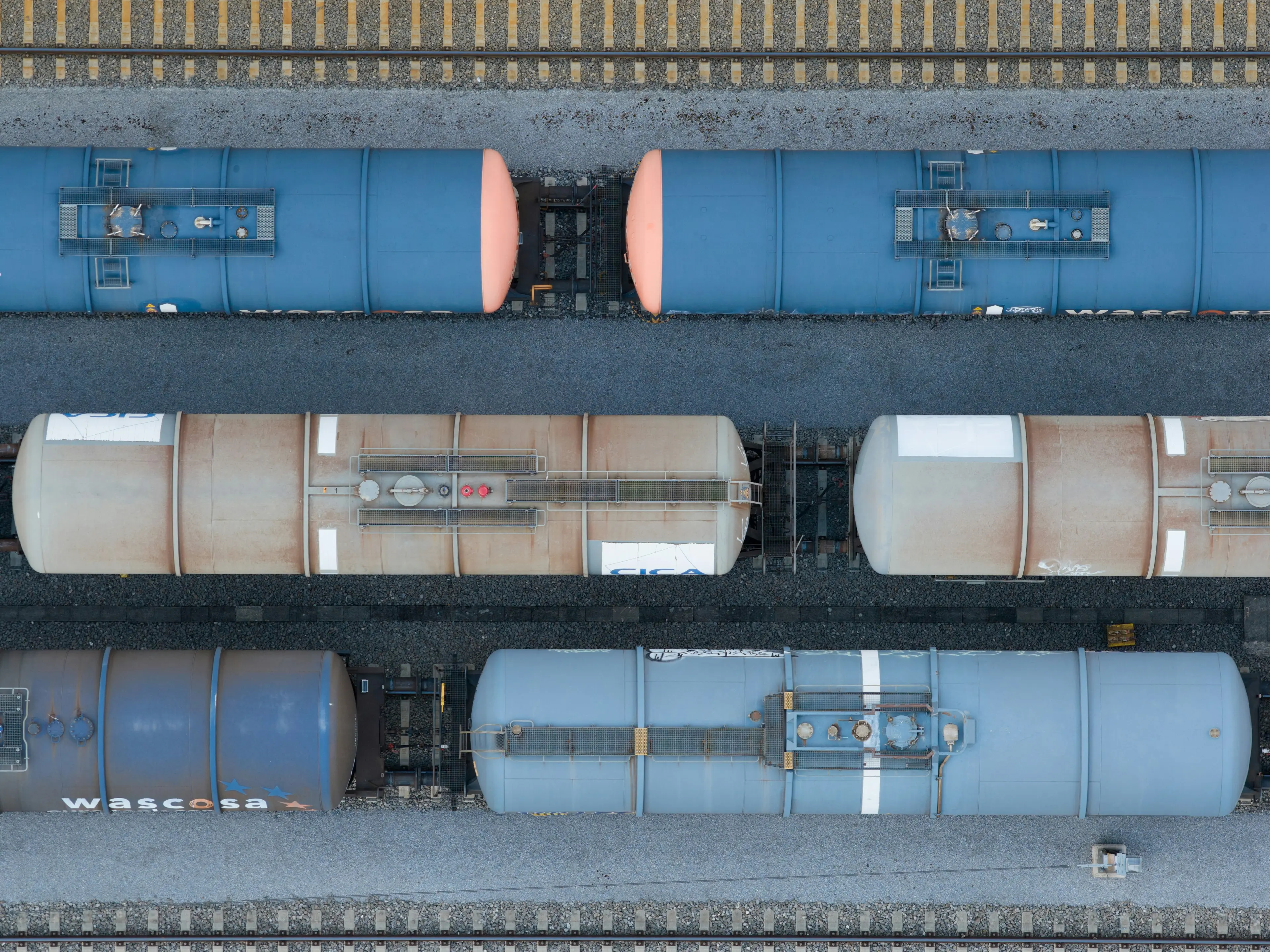
Raw materials are complex, but sourcing doesn't have to be

Europe’s chemical industry isn’t losing demand. It’s losing the cost advantage. And procurement teams that don’t modernize sourcing with AI will feel it first.
Over the past two years, I’ve had the same conversation with procurement leaders across Europe.
It usually starts like this:
“Everything feels harder.”
Harder to secure supply.
Harder to predict pricing.
Harder to protect margins.
Harder to compete.
And in the European chemical market specifically, that pressure isn’t cyclical.
It’s structural.
Energy costs remain elevated relative to Asia and parts of the U.S. Environmental regulation continues to intensify. Carbon reporting and compliance requirements are expanding. Geopolitical tensions are reshaping trade flows, more recently, with instability in the Middle East adding renewed pressure on energy markets and global shipping routes. And global competition isn’t slowing down.
Meanwhile, the expectation from the business hasn’t changed.
Protect margin.
Reduce risk.
Move faster.
Here’s the uncomfortable truth.
Materials are becoming more complex.
But sourcing complexity is largely self-inflicted.
And that’s the part we can fix.
The European Chemical Market Is Under Structural Pressure
Europe has long been a global leader in specialty chemicals, advanced materials, and high-performance manufacturing inputs. The engineering depth and regulatory rigor built strong reputations worldwide.
But the cost structure has shifted.
Energy prices in Europe have remained significantly higher than in many Asian markets, and a gap that has become more sensitive as Middle East instability introduces volatility into global oil and LNG flows.
Regulatory compliance, particularly around environmental and carbon frameworks, has added additional cost layers. Labor expenses are rising. And local manufacturing capacity in certain chemical categories is consolidating or relocating.
At the same time, Asian manufacturers, particularly in China, India, South Korea, and Southeast Asia, have scaled dramatically in capability and output. In many categories, quality parity is no longer the question. The question is visibility and access.
European buyers are no longer competing just within their own region.
They are competing globally for supply.
And yet many procurement teams are still operating within regional sourcing habits formed a decade ago.
That’s the real disconnect.
The Illusion of Stability in Direct Materials
Direct materials procurement has always been complex. Unlike indirect spend, you’re dealing with:
• Multi-tier supply chains
• Technical specifications
• Regulatory documentation
• Quality validation
• Long-term production dependencies
Switching a supplier is not as simple as switching a SaaS tool.
But complexity in materials does not require complexity in discovery.
And this is where I believe procurement has lagged AI adoption. Especially AI built, trained, and architected from the ground up for this industry.
In many organizations, supplier discovery still looks like this:
• Existing supplier list
• Industry contacts
• Trade shows
• Email chains
• Spreadsheets
• Manual qualification workflows
This worked when markets were stable and cost deltas were marginal.
It doesn’t work when volatility is structural, and increasingly influenced by external shocks, from energy markets to shipping disruptions through corridors like the Red Sea.
Because speed now equals resilience, and AI increases speed.
Your Supply Chain Strategy Is Now a Competitive Strategy
There’s a mindset shift happening.
Procurement is no longer just a cost center or operational function. It is a strategic lever.
If your raw material inputs are…
• Unstable
• Concentrated
• Overpriced
• Or geographically constrained
Then your business model is fragile.
We are seeing European manufacturers forced to rethink entire sourcing geographies because energy price disparities, now amplified by geopolitical risk, including Middle East-driven volatility, are eroding domestic competitiveness.
In some cases, it’s not even about switching suppliers permanently. It’s about having validated alternatives before you need them.
Optionality is the new advantage.
But optionality requires visibility.
And visibility requires better sourcing infrastructure, increasingly supported by AI.
Learning Asian Markets Is No Longer Optional
One of the biggest blind spots I see in European procurement today is underexposure to Asian supply markets.
This isn’t about chasing the lowest price.
It’s about understanding:
• Capacity distribution
• Production specialization
• Regulatory standards
• Export capabilities
• Supplier reliability profiles
There are thousands of capable manufacturers across Asia producing materials that European buyers either don’t see or struggle to validate efficiently.
The challenge isn’t that these suppliers don’t exist.
The challenge is that procurement teams don’t have a scalable way to identify, compare, and qualify them, without automation.
And when you’re managing daily operational demands, you don’t have time to manually explore new markets.
So inertia wins. And inertia is expensive.
The Technology Gap in Direct Materials Sourcing
Let’s talk about technology.
Procurement technology has evolved significantly in indirect spend and enterprise workflow management. We have:
• ERP systems
• Contract lifecycle management tools
• Spend analytics dashboards
• RFQ platforms
But direct materials sourcing remains surprisingly fragmented.
Most tools are designed around transactions, not discovery.
They help you manage suppliers you already know.
They don’t help you uncover suppliers you don’t.
That’s the gap.
And in volatile markets, where lead times can shift due to rerouted shipping and energy-driven production constraints, discovery and qualification speed matter more than ever. This is where AI becomes decisive.
Because the first team to validate an alternative supplier has leverage.
Materials Are Complex. Sourcing Them Doesn’t Have to Be.
This is where I think the narrative needs reframing.
Materials complexity is real.
Technical specs are real.
Compliance requirements are real.
But the process of identifying potential suppliers, screening them, and shortlisting viable options should not feel like detective work.
It should feel structured.
Searchable.
Comparable.
Transparent.
The fact that many procurement teams still rely on fragmented data sources, manual research, and legacy contact networks is not a sign of diligence.
It’s a sign that the tooling hasn’t caught up. Especially in applying AI to market intelligence.
And that gap is creating strategic risk.
The Energy Cost and Regulation Multiplier
Let’s zoom back out to Europe.
Energy costs alone have forced many chemical manufacturers to reconsider domestic production economics, a pressure that becomes more acute when global oil and gas markets react to instability in the Middle East.
Environmental compliance frameworks, while important, add reporting and operational overhead.
None of this is inherently negative.
But it does mean that European buyers must be more agile in sourcing.
When local suppliers face margin compression due to energy inputs, they pass cost pressure downstream.
If you don’t have validated alternatives, you absorb it.
If you do have alternatives, you negotiate differently.
Regulation and energy costs are not just macroeconomic variables.
They are sourcing variables.
And they should be treated as such.
The Competitive Landscape Is Global
The final pressure point is competition.
Asian manufacturers are not just competing on price anymore. In many categories, they are competing on scale, specialization, and innovation speed.
If European buyers operate within a limited supplier ecosystem, they risk being structurally outpaced.
But this doesn’t mean abandoning European suppliers.
It means building optionality.
Understanding market breadth.
Creating comparative intelligence.
And reducing time-to-validation.
Because the companies that can use AI to move faster in supplier identification will move faster in pricing negotiations, product launches, and market response.
What Needs to Change
From my perspective, three shifts are necessary in direct materials sourcing:
Discovery Must Become Systematic
Supplier discovery should not depend on individual relationships or institutional memory.
It should be structured, searchable, and data-driven. With AI accelerating the search.
Procurement teams should be able to identify potential manufacturers globally in minutes, not weeks.
Qualification Speed Is a Strategic Metric
Time-to-validated-supplier should be measured like any other operational KPI.
If it takes months to assess alternatives, you are strategically exposed.
Faster qualification does not mean cutting corners.
It means reducing friction.
Procurement Must Expand Its Geographic Comfort Zone
Asian markets are not homogenous. China is not India. India is not Vietnam. Vietnam is not Malaysia.
Each region has unique production strengths.
European procurement teams that build fluency in these ecosystems gain leverage. And AI helps scale that fluency.
Those who don’t will increasingly operate at a disadvantage.
A Founder & Practitioner’s Perspective
When we speak with procurement leaders, we rarely hear, “We don’t care about better sourcing.”
What we hear is… “We don’t have time.”
Which is exactly the point.
If sourcing requires excessive manual effort, it won’t scale.
And if it doesn’t scale, resilience doesn’t scale.
That’s why I keep coming back to this line:
Materials are complex.
But sourcing doesn’t have to be.
The complexity belongs in chemistry, engineering, and regulatory science.
It does not belong in supplier discovery workflows.
The Next Era of Direct Materials Procurement with AI
The next phase of procurement technology won’t be about automating paperwork.
It will be about expanding visibility, powered by AI.
The teams that win in the European chemical market over the next five years will not necessarily be the ones with the lowest costs.
They will be the ones using AI to create:
• The broadest validated supplier base
• The fastest qualification cycle
• The most geographic optionality
• The highest visibility into global production
Because volatility isn’t going away.
Energy markets will fluctuate — increasingly shaped by geopolitical stress points like the Middle East. Regulation will evolve. Competition will intensify.
But procurement teams that modernize their sourcing infrastructure with AI can turn volatility into leverage.
And that’s the difference between reacting to market pressure and strategically navigating it.