How Kenvue built supply resilience from the inside out
A partnership built for volatility
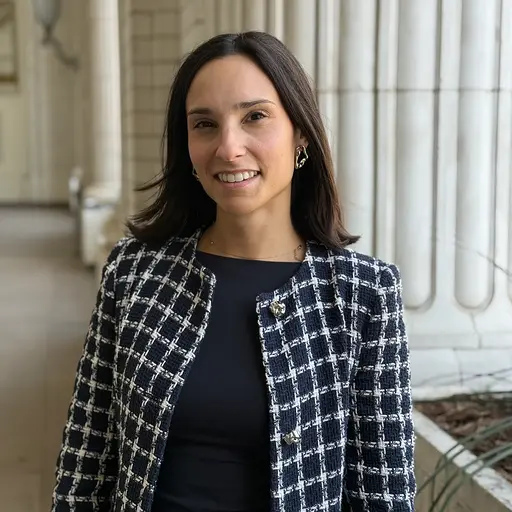
Kenvue’s Emir Sassi joined the company weeks before it spun out from Johnson & Johnson. In a recent webinar, he sat down with Valdera CEO Sruti Arulmani to talk through what direct materials resilience actually takes.
No one notices the electricity until it fails. A resilient supply chain is the same: when the product stays on the shelf, nobody sees the work holding it there.
Emir Sassi joined Kenvue at close to the hardest possible moment. It was a couple of weeks before the consumer health company formally separated from Johnson & Johnson, and he had been hired to help build a procurement function for a $15 billion business that, in most respects, didn’t exist yet.
“It’s a perfect example of building the plane while flying it,” he said. The team had to stand up systems, infrastructure and talent while still producing, shipping and selling every day, with no room for a disruption. And that was before the market got involved.
The change was cultural as much as operational. Kenvue was moving from a pharma and med-tech parent into a standalone consumer goods company, with faster cycle times, sharper category focus and tougher competition. “A lot has been accomplished,” Emir said, “It’s been an amazing journey so far.”
Yet achieving that success amidst mounting global disruptions proved that conventional resilience measures would no longer cut it.
Watch the full webinar here →
Dual sourcing stopped being enough
For a long time, resilience in direct materials meant one thing: dual sourcing, and adding more of it over the years. Emir was quick to say that approach has run out of road. “We quickly realized it was not sufficient.”
Tariffs are part of why. A second supplier used to count as a backup. Today, if both sit in the same country, it isn’t one. “In the past you might have a second supplier in China,” Emir said. “Today that’s no longer a solution. You need to find a second source somewhere else.”
The harder problem is that most of what a team knows never leaves the team. “When we first meet a lot of the partners we work with, there’s so much institutional knowledge living in people’s minds and their inboxes, fragmented across so many places,” Sruti said. Emir sees the same thing, and the risk that rides along with it. “There’s high turnover today. When people leave, we lose that knowledge and have to start from scratch. What we knew yesterday is not necessarily valid today.”
He splits the exposure in two. There is material risk, where something is scarce and only a handful of suppliers can make it. And there is supplier risk, where a material is widely available but the spend sits with one partner who runs into trouble. Keeping both views current, he argues, is what tells a team where to spend its attention.
In consumer goods, the cost of getting that wrong is unusually blunt. “When you lose your shelf space, even for a day, you might never get it back,” Emir said. Consumers switch, and even a portfolio of loved, iconic brands isn’t immune.
A resilience program with four moving parts
Emir built his approach around four ideas.
Agility, which means resilience is owned across R&D, quality, supply and trade compliance rather than parked inside procurement. “It’s not a one-man job,” Emir said. Flexibility, through diversification, alternative formulations and nearshoring where it makes sense. Visibility, through continuous risk assessment that flags where to build safety stock ahead of a shock instead of after it. And priority, the long-term supplier partnerships where continuity planning is shared rather than one-sided.
Running underneath all four is a move from reacting to anticipating. “If the environment is stable and you sign a contract, you’d only revisit it a few months before it ends,” Emir said. “Today you can’t afford to wait.”
Where Valdera comes in
That anticipation is the work Kenvue and Valdera have been doing together. For Emir, the pull was being able to see past the sticker price. “Price is not the only thing,” he said. Valdera lets his team weigh alternatives on specification, grade, location, volume, timing and audits, and increasingly on tariffs, to land on a real cost rather than a headline one. “It saves us a lot of time and money.”
Just as often, it confirms a call the team has already made. “If the price is good, the conditions are good, and we can confirm it with Valdera, that’s a very good takeaway,” he said. When disruption hit the Strait of Hormuz, the team reached qualification times Emir described as exceptional. “When we focus and set the right priority, we can do miracles.” It can’t be the standard, he added, but it’s good to know the team can push on the gas when it has to.
ESG is moving into the same frame. Emir doesn’t accept the old trade-off. “I don’t buy the idea that ESG has to be more expensive,” he said. With EUDR, PPWR and CBAM coming into force, he wants to know early on which suppliers can meet them, which is another signal Kenvue and Valdera are working to surface inside the platform.
Sruti sees the pattern across Valdera’s customers. “We rarely see people go with the lowest-cost option,” she said. “Most often they’re looking for the best value.” Handled the right way, sustainability tends to sit alongside the other priorities rather than fighting them.
Procurement as a revenue function
Sruti’s wider argument is that procurement has moved from the back office to the balance sheet. “Procurement is a revenue function,” she said. “It’s not a back-office black box.” The urgency is starting to show up in the data. She pointed to Hackett Group research finding that 43% of organizations are now actively using AI to tackle these problems, double the share a year earlier, with trade wars and regulatory risk both sitting among the top five threats leaders name.
Asked what he’d tell someone at the start of the same journey, Emir kept it to three words: document, prioritize, automate. “You can’t solve this alone. Find the right partners, and use AI.”
He is careful about where the technology stops. Data can surface options and refresh prices; it can’t make the decision. “The machine cannot make the decision for us. It can suggest a few things,” he said. The judgment, linking what’s happening outside the company to what matters inside it, stays human.
And the work is never quite finished. “You don’t fix resilience for good,” Emir said. “You just keep it up to date.” He reaches for an analogy anyone who has run a supply chain will recognize. “It’s like electricity. When it runs, nobody says thank you. The day it goes off, people start complaining.” Keeping the lights on is the job. Making it look effortless is the skill.
Kenvue and Valdera partner across market intelligence, sourcing and supplier qualification for chemicals and raw materials. To see where the same approach could apply to your spend, start with a diagnostic.We’ll run your data through our system and send the opportunities back to you in a couple of days.